 Skip to content
What is Music Therapy?
Evidence-based care, delivered through music.
Music therapy is a clinical, evidence-based allied health discipline in which a Registered Music Therapist (RMT) uses music-based interventions to address non-musical goals — emotional, cognitive, communication, physical and social — through structured, intentional approaches grounded in therapeutic connection.
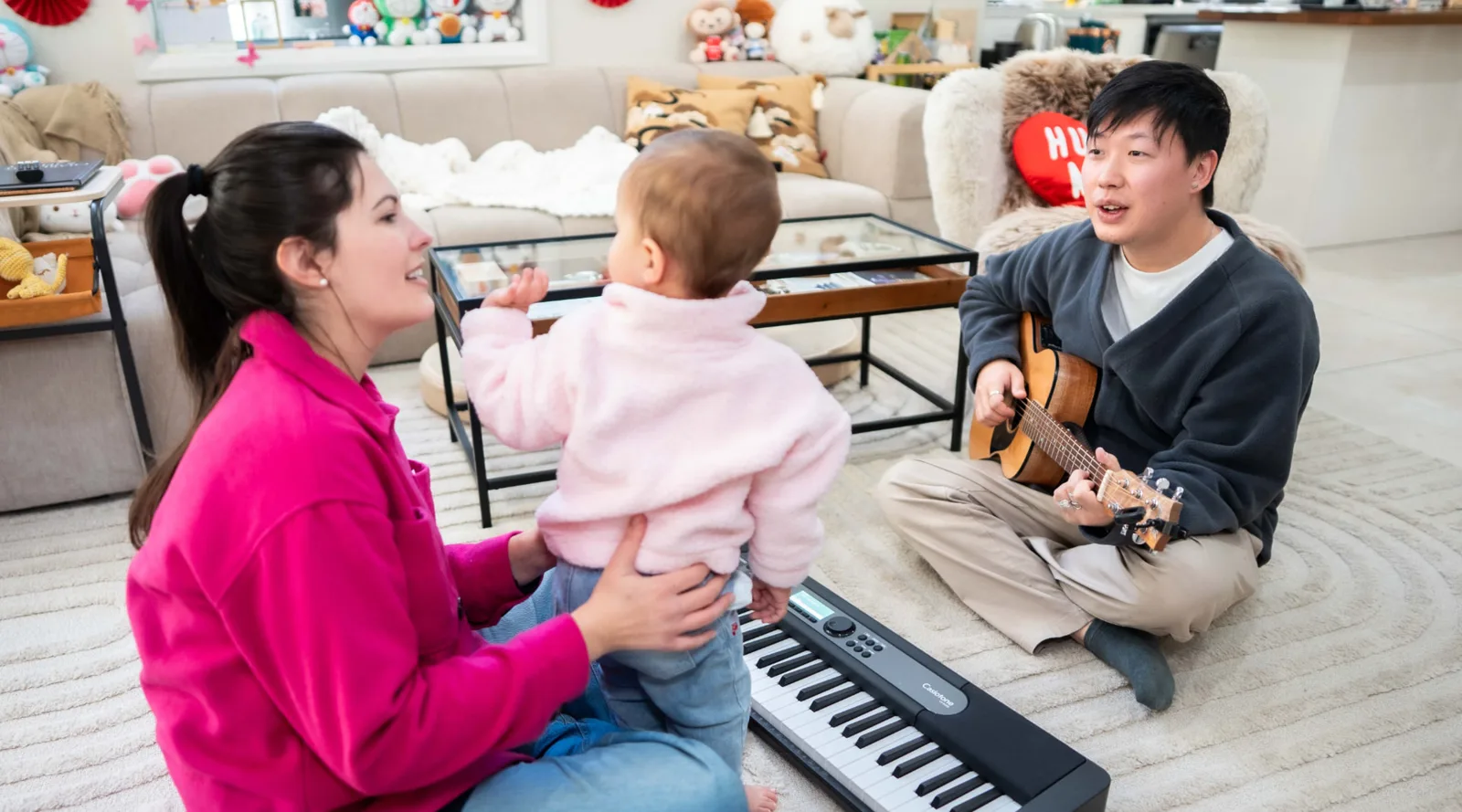
Active and receptive approaches
Sessions can draw on active or receptive interventions. Most therapy plans combine both, selected on the basis of assessment and reviewed periodically as goals shift.
Active interventions
Build confidence, communication and engagement through:
- Clinical improvisation
- Supported songwriting
- Soundtrack creation
- Therapeutic singing
- Instrumental play
- And more…
Receptive interventions
Support self-reflection, emotional exploration and sensory regulation through:
- Guided music listening
- Song lyric analysis
- Playlist creation
- Music-assisted relaxation
- And more…
What makes music therapy distinct?
Music therapy can complement other allied health supports, incorporating strategies informed by speech pathology, occupational therapy and psychology where they align with assessed goals.
What distinguishes it is music’s unique motivational pull — its ability to capture attention, evoke emotion and make participation inherently rewarding, turning difficult or repetitive tasks into engaging, meaningful experiences.
Methods are flexibly adapted for children and adults with disability, neuro-developmental conditions, acquired brain injury and mental health presentations — keeping interventions accessible, strengths-based and clinically relevant.
Emotional wellbeing
Music can access affect that language can’t reach — grief, anxiety, anger, joy — providing a contained, safe channel for expression and processing.
Communication & social skills
Shared rhythm and song structure scaffold joint attention, eye contact and turn-taking, particularly for clients with limited verbal communication.
Cognition & memory
Familiar and structured tunes can support memory, attention and learning by engaging multiple areas of the brain, while strengthening skills such as information processing and problem-solving.
Developmental goals
Structured music-based play targets speech and language, motor coordination and social skills across all developmental trajectories.
Regulation & relaxation
Live music and guided listening support arousal regulation and are associated with reduced physiological stress markers and lower perceived pain.
Identity & self-expression
Therapeutic songwriting, improvisation and preferred-music listening support identity work, self-efficacy and narrative processing.
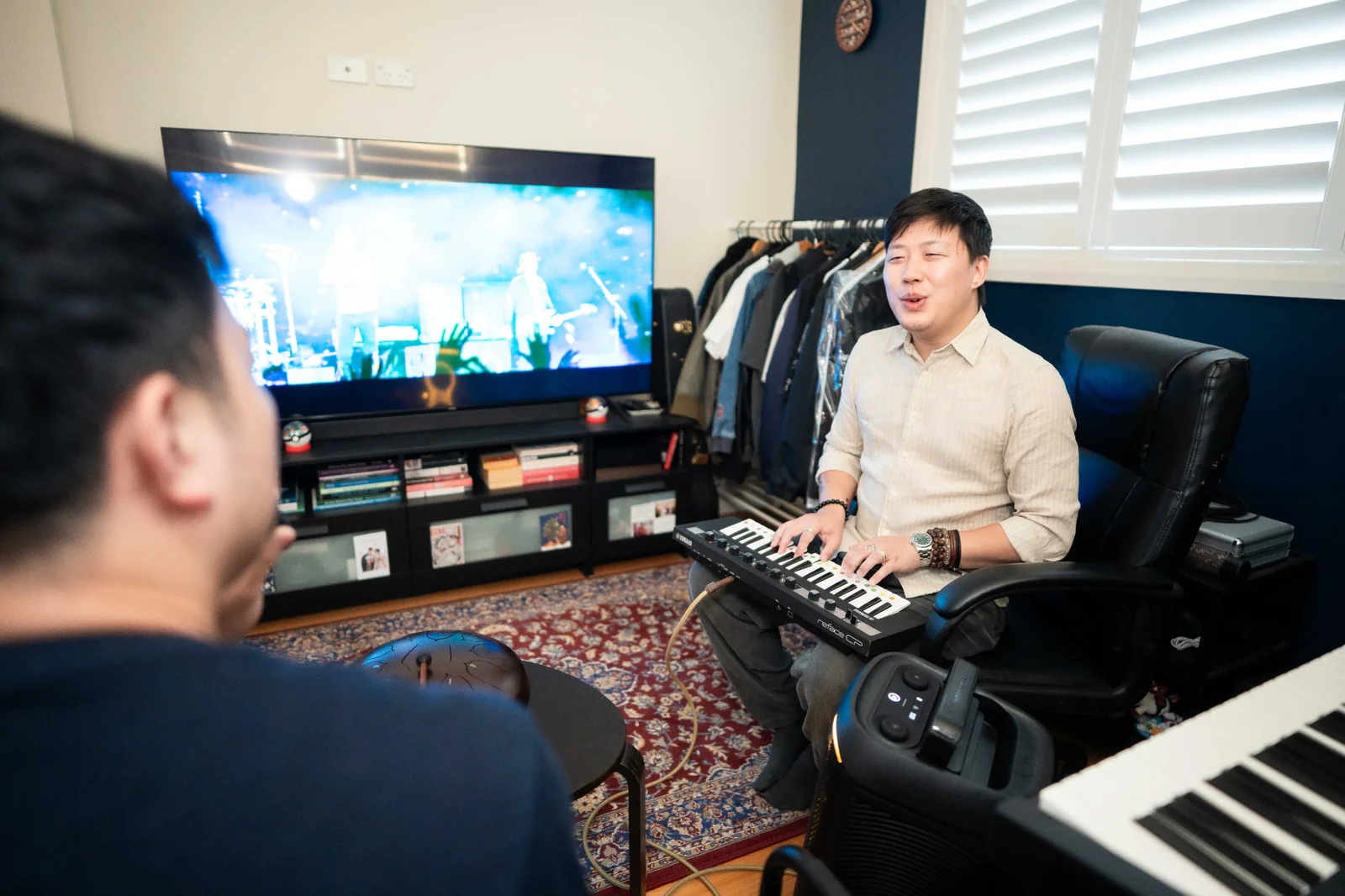
How is it different from a music lesson?
A music lesson teaches musical skills, technique, performance and repertoire. Music therapy uses music as a way of supporting broader goals, and there is no expectation to become a musician, perform or be graded.
Music can still be taught as part of therapy when learning an instrument supports a person’s goals — building attention, coordination, planning, impulse control and emotional regulation. The focus, however, is not on becoming a better musician, but on what music can help make possible.
Inclusive care
Who is it for?
Music therapy is for everyone. Eligibility is defined not by diagnosis, but by goals, strengths and challenges.
For people who connect through music
People of all ages who are motivated by music — including children who enjoy singing, dancing, playing instruments or listening to their favourite songs, as well as older children and adults who may use music to support their mood, relaxation, exercise, focus or everyday wellbeing.
For people who want adapted support
People who don’t fit comfortably within conventional approaches and are looking for support that feels more personalised, engaging and suited to the way they learn and participate, or who respond more readily to creative yet predictable processes.
For anyone with goals or areas to work on
Regardless of diagnosis or musical background, the focus is on exploring music in an enjoyable, accessible and meaningful way to foster important skills, support individual goals and create opportunities for positive change that can enhance everyday participation and quality of life.
Progress takes time
Meaningful change rarely emerges from a single session — it develops through a strong therapeutic relationship, consistent engagement and repeated practice. A first-session success is encouraging, but what matters is whether that engagement can be built upon over time.
If you’re weighing up providers, take the time you need to look for consistent, concrete signs of progress over several weeks — finding the right clinical fit is key to supporting meaningful progress.
Small signs of progress
- Becoming more comfortable with the therapist
- Developing trust and rapport
- Being more willing to engage
- Tolerating new experiences
- Sustaining participation for longer
- Trying new ways to communicate or interact
- Showing more confidence in musical choices
- Gradually working towards specific therapeutic goals
“Fred NewmanWhat we were creating in therapy... was performance... and that performance was of wonderful, developmental, therapeutic value.
People were learning how to ‘perform’ — people were learning to perform beyond themselves.
We become who we are by continuously being who we are not.
”