 Skip to content
About Me
Music gives us a way to connect.
Connection gives us a way to grow.
I’m a Registered Music Therapist (RMT) with a Master of Music Therapy from the University of Melbourne and over eight years of clinical practice across hospital, education, disability, aged care, mental health, palliative care and community settings.
How I came to this work
My path into music therapy began long before university. My godfather, a music therapy lecturer at New York University, taught me that music belongs to everyone — that nobody should feel judged for expressing themselves through it. That principle still underpins how I practise.
Rather than specialising early, I worked across as many clinical populations as I could. That transdisciplinary grounding shaped a resource-oriented approach: a wide repertoire of evidence-informed interventions, matched to each person’s presentation, capacity and preference, and adjusted through ongoing clinical review.
Qualifications
- Master of Music Therapy — University of Melbourne
- Bachelor of Music (Performance) — University of Melbourne
- Registered Music Therapist (RMT)
- Over 8 years of clinical experience
- Clinical placement supervisor for students
- Therapy assistant on a large-scale research project focused on developing an accessible music program for aged care facilities
- Songwriter for a music-based early learning app for parents and teachers
Breadth of experience
My experience across diverse settings allows me to work with a wide range of clients and therapeutic goals. I draw on a broad range of skills and approaches to create personalised music therapy that is responsive to each person’s unique needs, strengths and interests.
Hospital & mental health
Work within holistic mental health teams in hospital settings, including transdisciplinary learning and collaborative care planning with psychiatrists, psychologists, counsellors, nurses and other hospital staff.
Multidisciplinary teams
Working alongside speech pathologists, occupational therapists, and other allied health specialists to ensure goals are genuinely integrated across multiple therapeutic perspectives to support comprehensive and functional outcomes.
Community & disability
Extensive community practice with children and adults with disability, neuro-developmental conditions and acquired brain injuries — adapted to home and daily environments to target real-world outcomes.
Telehealth
Delivering sessions online to address social anxiety, or support disability in rural communities through approaches designed to maximise engagement and resources that enhance therapy both on and off screen.
Group programs
Day programs, aged care and childcare settings — including performance elements and opportunities for music learning and social skill development.
Across the lifespan
Working with children, adults and older people across a range of settings, including schools, aged care, palliative care and community services.
What keeps me inspired
These moments in my work changed the way I view music. They made it less about performer and audience, and more about music that belongs to everyone: whether it’s a made-up lullaby between mother and child, a rap song blaring in a teenager’s headphones, or a shaky duet of “Fly Me to the Moon” between husband and wife.
We each develop a personal relationship with music, shaped by our experiences, relationships, culture and changing preferences across the lifespan. The fact that we can describe songs as “my music” reflects how closely music can become connected to our sense of identity and self-expression.
Music remains present across significant and everyday moments, evolving alongside us as we grow, develop and move through different stages of life.
In the session room
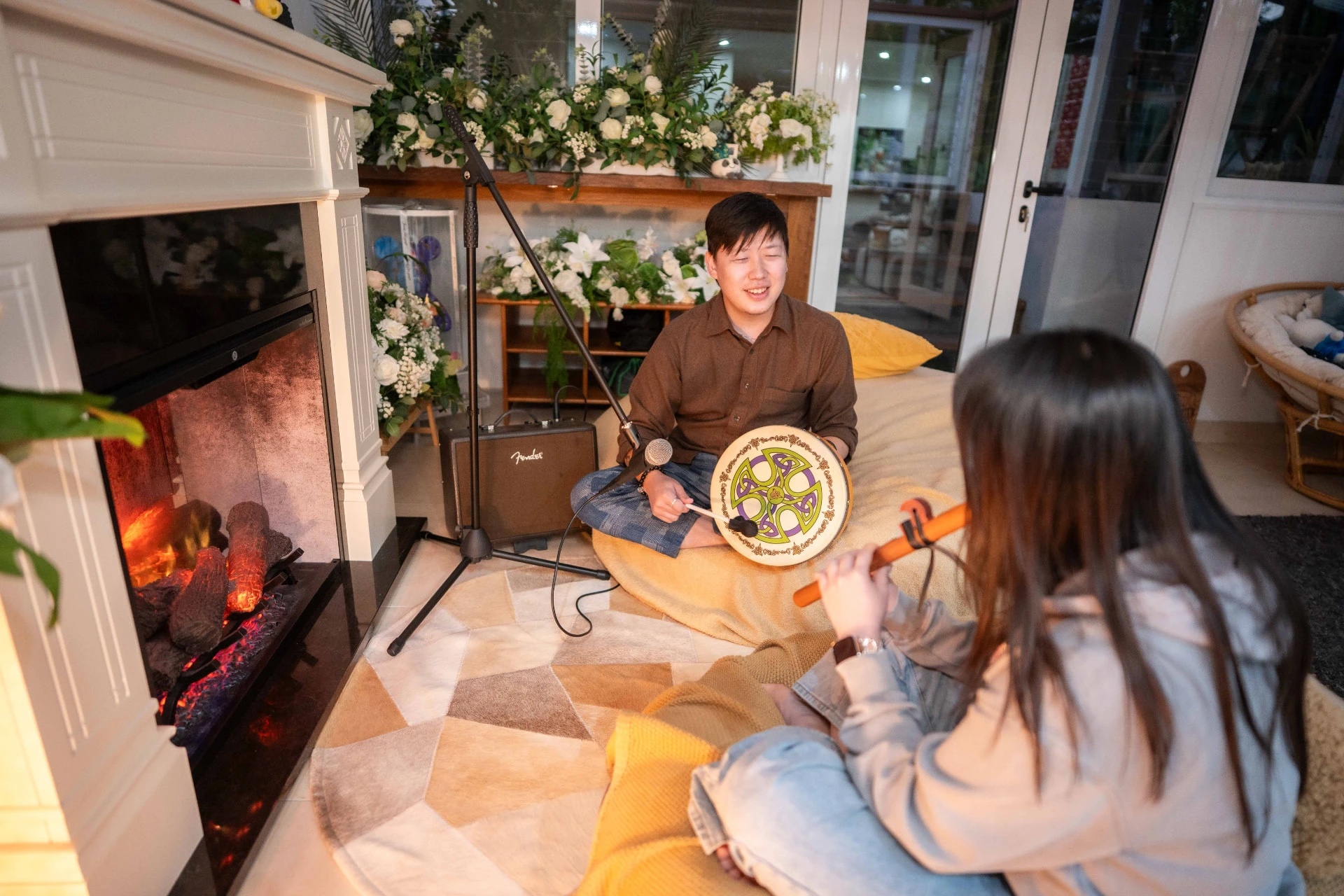
As a multi-instrumentalist, I adapt the musical medium to each client’s preferences, sensory profile and access needs.
- Voice
- Guitar
- Piano
- Drumkit
- Clarinet
- Saxophone
- Percussion
- Traditional Chinese flute
Above all else, music shouldn't need to feel perfect to be meaningful. That belief is what drew me to music therapy: that there is musicality in every person, and everyone deserves the chance to discover what it can mean for them.
“Jodi PicoultMusic therapy, to me, is music performance without the ego. It’s not about entertainment as much as it’s about empathizing.
”